
Procurement Approval Automation: From Requisition to Purchase Order
Procurement is one of the most approval-heavy functions in enterprise operations and one of the most rewarding to modernise. This is what a well-designed procurement approval workflow looks like.
By HololTeck Editorial

Key takeaways
- 01Procurement approvals often involve multiple thresholds, multiple approvers, and multiple systems.
- 02Automation of the routing and reminder mechanics produces significant cycle time reduction.
- 03Integration with ERP and financial systems is essential for full value realisation.
- 04Vendor management and contract compliance benefit from the same digital discipline.
- 05The ROI on procurement approval automation typically exceeds most other approval categories.
The complexity of enterprise procurement approvals
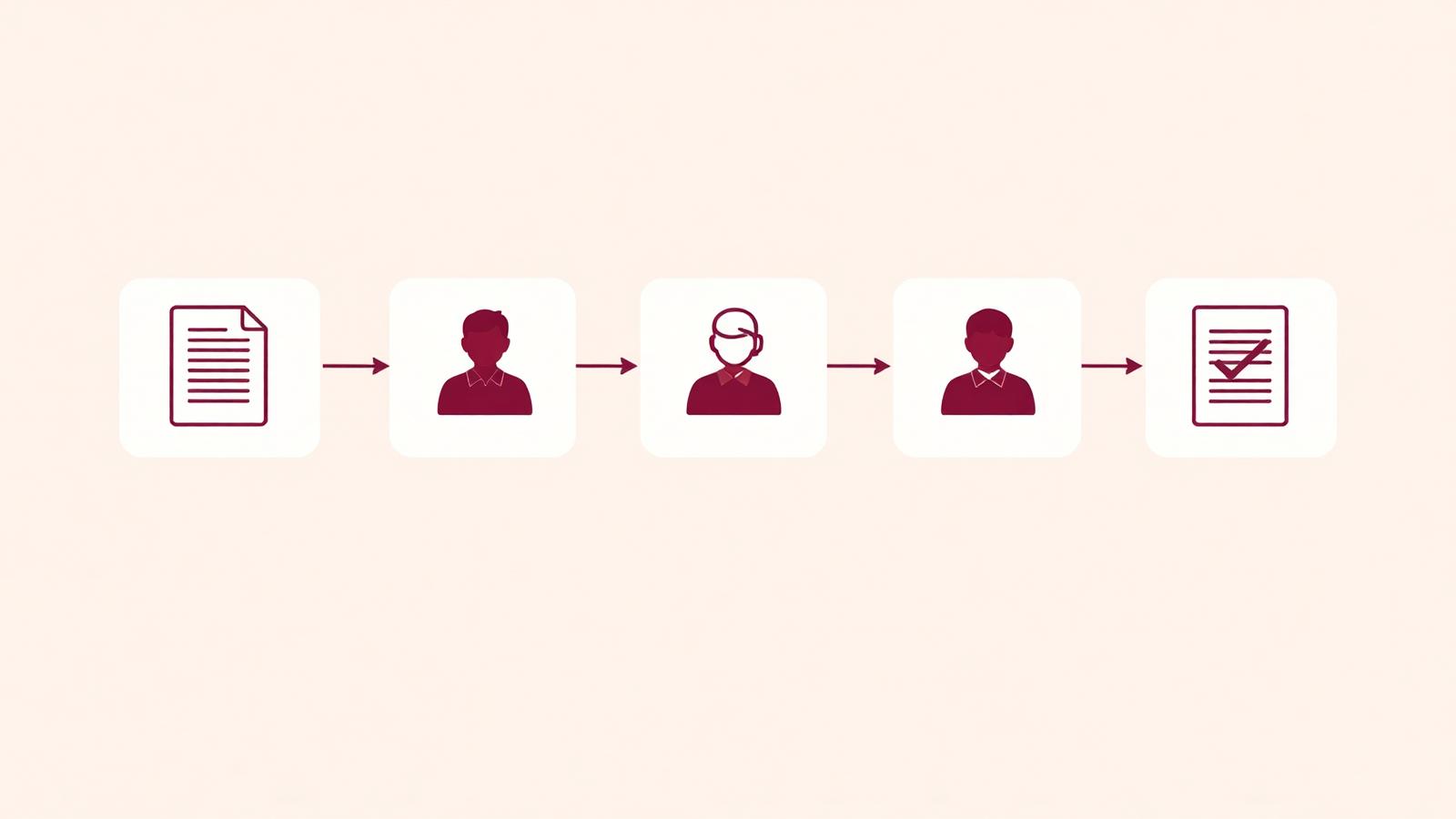
Procurement approvals are among the most complex approval workflows in most enterprises. A typical request may need to be reviewed against budget, against contract terms, against vendor status, against corporate policy, and against the specific competencies of the requesting department. Different amounts trigger different approval thresholds. Different categories require different specialist reviewers. Different vendors require different due diligence.
The result is that even a modest purchase can require six or eight approvers in a specific sequence, with the process spanning weeks. And that is when everything works. When approvers are unavailable, when documentation is incomplete, when a threshold is misapplied, the cycle time extends significantly.
This complexity is what makes procurement approvals one of the most rewarding targets for automation. The value locked up in cycle time reduction alone is significant, and the compliance benefits are substantial.
Routing logic that handles the real complexity
The routing logic for procurement approvals needs to be genuinely sophisticated. Approvers vary by category, by amount, by department, by vendor, and by whether the request is against an existing contract or a new engagement. Sequential and parallel approvals both come into play. Escalations need to be handled thoughtfully.
A well-designed procurement approval workflow encodes all of this in a way that is transparent to the requester and to the approvers. The requester submits and can see the expected approval path. Each approver sees the request in context — what has been approved already, what remains, what triggered their specific involvement. The workflow adapts to changes in organisational structure or policy without requiring rebuild.
This kind of sophistication requires a platform designed for it. General-purpose workflow tools tend to struggle with the specific patterns of procurement; purpose-built procurement platforms handle them natively.
The cycle time impact
In deployments we have observed, digitising procurement approvals typically reduces average cycle time from weeks to days. Some categories see reductions from months to weeks. The specific numbers vary by starting point and by category, but the direction and the magnitude are consistent.
The downstream impact of faster procurement is significant. Projects that were waiting on purchases can begin. Suppliers can be paid on more favourable terms because approval bottlenecks no longer delay processing. Emergency purchases can be authorised in hours rather than days when circumstances require.
This impact often exceeds the direct productivity savings. The business is faster overall because procurement is no longer a systematic source of delay.
Integration with ERP and financial systems
Procurement approval workflows produce their full value when they integrate deeply with the ERP and financial systems that process the actual purchases. An approved requisition should automatically become a purchase order in the ERP. A received purchase should automatically trigger accounts payable workflows. Contract terms should automatically populate into the approval workflow when the request references an existing contract.
Without this integration, digital approvals are still valuable — but the manual work of transcribing approved requests into downstream systems eats much of the time saved. With proper integration, the workflow is truly end-to-end.
This is where enterprise procurement platforms tend to differentiate. The ones with mature ERP integrations produce dramatically better outcomes than those requiring manual reconciliation. Evaluate this rigorously during selection.

Vendor management as an adjacent workflow
Adjacent to procurement approvals is vendor management: onboarding new vendors, maintaining their information, monitoring their performance, offboarding them when appropriate. Each of these involves approvals — a new vendor needs to be vetted and approved before purchases can flow to it; a change in vendor terms needs to be reviewed; a termination needs sign-off.
Modern procurement platforms handle vendor management as an integrated workflow rather than a separate concern. Vendor records include the full history of approvals, purchases, and performance. Changes flow through the same audit trail as procurement approvals themselves. The compliance benefit is significant.
This integration also produces better data for procurement analytics. Vendor spend patterns, category trends, and contract utilisation all become visible in ways that manual vendor management rarely achieves.
Contract compliance and utilisation
Many procurement approvals should be assessed against existing contracts — is this purchase within an existing framework agreement? Is it at the negotiated price? Does it consume against a defined volume commitment? Manual approval processes rarely surface this information consistently, leading to duplicate contracting, off-contract purchases, and missed volume discounts.
Digital workflows can surface contract context automatically. When a request is submitted, the system identifies applicable contracts, presents the relevant terms, and highlights any deviations. Approvers make better decisions with better context. Compliance improves. Volume commitments are more consistently utilised.
The financial impact of improved contract compliance is often substantial. Businesses that have measured this after implementation frequently report savings that alone justify the approval platform investment.
Change management for procurement teams
Procurement teams are often skilled operators of the existing manual processes and have well-developed intuitions about the routing rules that are actually in force versus those that are theoretically documented. Introducing a digital workflow requires bringing this tacit knowledge into the explicit configuration of the platform.
The best implementations involve the procurement team deeply in the configuration phase, not just as informants but as designers. They know which routing rules are aspirational versus operational. They know which approvers are actually available versus nominally responsible. They know the exceptions that always come up and how they need to be handled.
Skipping this involvement leads to platforms that are theoretically correct but practically frustrating. Including it produces platforms that reflect how the business actually operates and that the team welcomes rather than resents.
References & further reading
Authoritative research and industry sources that informed this article.
- [1]Reimagining the Corporate Function
McKinsey & Company
- [2]The Case for Digital Reinvention
Harvard Business Review
- [3]
- [4]
- [5]eIDAS Regulation on Electronic Signatures
European Commission
Frequently asked
Should we replace our existing procurement system or add a workflow layer?
Depends on the maturity of the existing system. Modern procurement platforms often include workflow natively; older systems benefit from a dedicated approval layer.
How do we handle urgent purchases?
Well-designed workflows include expedited paths with appropriate additional review — not workarounds that skip approvals.
What about small-value purchases that used to happen on corporate cards?
These can remain outside the approval workflow, with card-based controls managing the risk. Not every purchase needs the same level of approval rigour.
How long does implementation typically take?
Basic workflows can be live in weeks. Full ERP integration and mature routing typically take one to two quarters depending on existing systems.
Related articles in Approval Management
Digital Approval Workflows: The Quiet Productivity Revolution
Approvals are one of the most consistently underestimated sources of organisational drag. Getting them right is one of the highest-return, lowest-glamour operational upgrades available.
12 min readApproval ManagementHR Approval Systems: Time-Off, Hiring, and Everything Between
HR is one of the approval-heavy functions in most businesses. Modernising its workflows removes a category of frustration for employees and managers alike, and produces cleaner data along the way.
11 min readApproval ManagementInvoice Approval Automation: The Accounts Payable Modernisation Story
Accounts payable is often the last function to be modernised. This is what a modern AP workflow looks like and why it belongs on the roadmap of any operations leader who cares about cash flow.
11 min read