
Invoice Approval Automation: The Accounts Payable Modernisation Story
Accounts payable is often the last function to be modernised. This is what a modern AP workflow looks like and why it belongs on the roadmap of any operations leader who cares about cash flow.
By HololTeck Editorial

Key takeaways
- 01Invoice approval is a high-volume, well-structured workflow that benefits enormously from digital automation.
- 02AI-driven extraction of invoice data eliminates the largest source of AP administrative work.
- 03Three-way matching against purchase orders and receipts is dramatically easier in digital workflows.
- 04The cash flow impact of faster AP processing often exceeds the productivity savings.
- 05AP modernisation is one of the highest-ROI operational upgrades available in most businesses.
The traditional accounts payable function
Accounts payable has traditionally been one of the most manually intensive functions in business operations. Invoices arrive by email, by mail, by portal, by fax in some legacy contexts. Each invoice needs to be logged into a system, matched against a purchase order, verified against a receipt, routed for approval, and eventually paid. The process is repetitive, error-prone, and disproportionately consuming of finance team time.
The consequence is that AP is often a source of significant hidden cost. Payment delays that damage supplier relationships. Missed early payment discounts. Duplicate payments that later require recovery. Late payment penalties. Fraud losses from the inability to detect anomalies at the volume of manual processing.
Modernising AP is one of the highest-ROI operational upgrades available in most businesses. The productivity savings alone are significant; the downstream cash flow and supplier relationship benefits are often larger.
AI-driven invoice extraction
The largest source of AP administrative work has historically been the extraction of invoice data — vendor, invoice number, line items, amounts, dates, tax codes — into the accounting system. This is repetitive, tedious, and error-prone work that has consumed enormous amounts of finance team time.
Modern AI-driven extraction handles this with dramatically higher speed and accuracy than manual entry. An invoice arrives as a PDF or an image; the AI extracts the structured data; the data flows into the accounting system for review and matching. What used to take several minutes per invoice now takes seconds.
The AI is not perfect. Some invoices are unusual. Some fields require judgement. But well-designed extraction handles the routine cases automatically and flags the edge cases for human review — inverting the traditional pattern where humans processed everything and only escalated the truly problematic invoices.
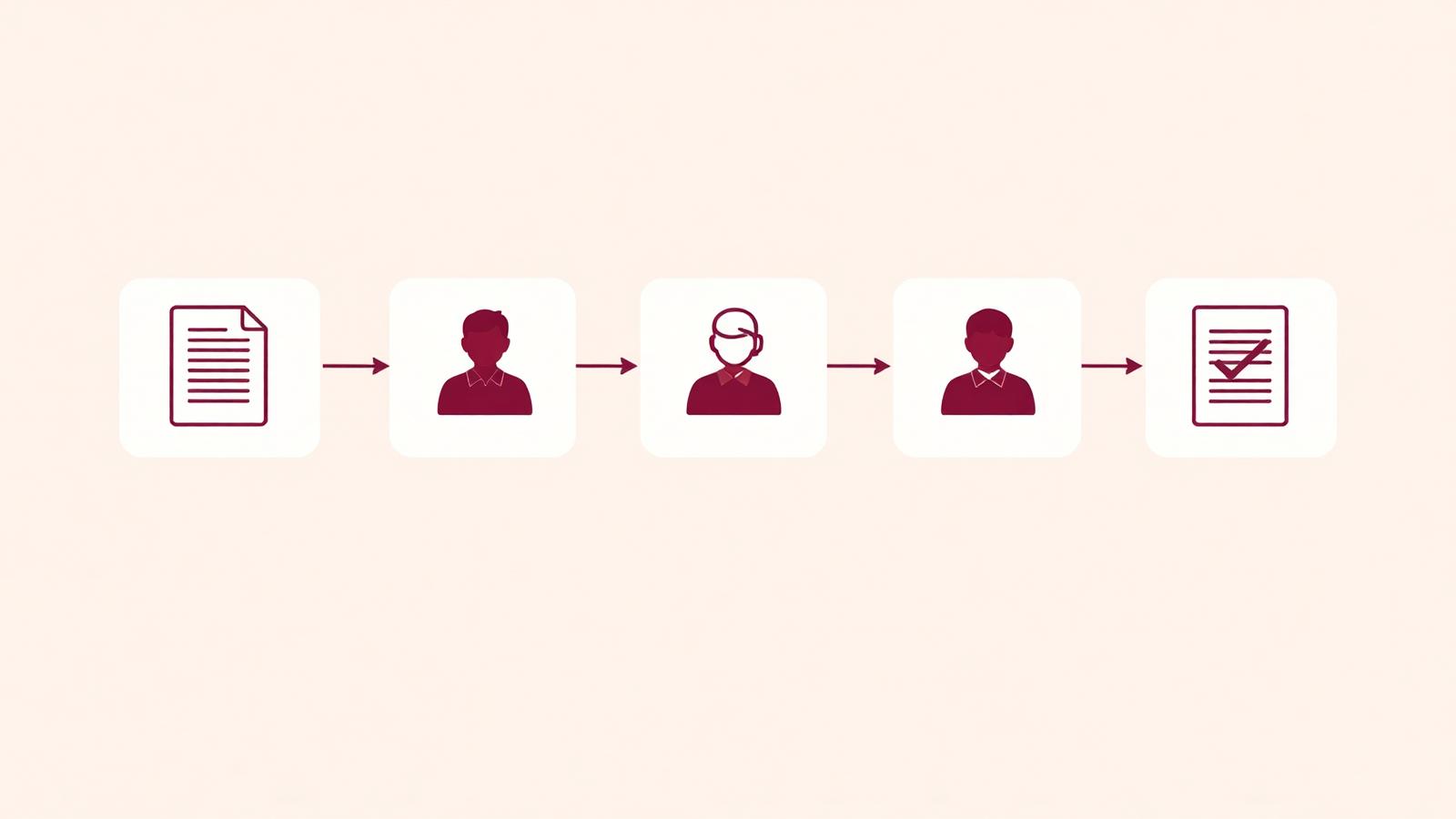
Three-way matching in digital workflows
Three-way matching — verifying that an invoice corresponds to an approved purchase order and a received delivery — is one of the core controls in AP. Done manually, it is a significant workload that produces friction with suppliers when discrepancies require investigation.
Digital workflows automate the matching. When an invoice arrives, the system automatically identifies the corresponding purchase order and receipt, verifies the match, and either routes the invoice for payment approval or flags the discrepancy for review. The AP team focuses on the exceptions rather than on the routine matches.
The compliance benefit is significant. Every match is documented. Every exception is investigated with a clear audit trail. Discrepancies are surfaced quickly rather than accumulating and causing month-end reconciliation pain.
Approval routing for exceptions and high-value invoices
Invoices that match cleanly against approved purchase orders often need no additional approval; the earlier approval of the purchase order authorised the eventual payment. Invoices that fail matching, that exceed authorised amounts, or that are for categories requiring additional review need routing to the appropriate approvers.
A well-designed AP workflow handles this routing transparently. The system knows which discrepancies need which reviewers, which amount thresholds trigger which additional approvals, and which categories require specialised sign-off. Approvers receive the invoice with the relevant context and act quickly.
This is where AP approval workflows integrate with the broader approval infrastructure of the business. The same platform, the same routing logic, the same mobile-friendly approval experience. Consolidation on a single approval platform pays dividends across all these categories.

The cash flow impact
The cash flow impact of faster AP processing is often larger than the productivity savings. Invoices that used to sit for weeks awaiting matching and approval get processed in days. Early payment discounts that used to be missed because of timing get captured. Late payment penalties that used to accumulate get eliminated.
For businesses with significant supplier relationships, the reliability of payment timing also affects negotiating leverage. Suppliers who know they will be paid on time are more willing to extend credit terms, offer discounts, and prioritise the business's orders. This is a soft benefit that becomes hard when it compounds across the supplier base.
The cash flow modelling for AP modernisation should include these effects, not just the direct productivity savings. The business case is dramatically stronger when it does.
Fraud detection and duplicate prevention
AP is a common target for fraud, both external and internal. Duplicate invoices from suppliers taking advantage of manual processing. Phantom invoices for services not rendered. Manipulation of vendor bank details to divert payments. Manual AP processing struggles to catch these consistently.
Digital workflows with AI-driven anomaly detection catch a significant share of these patterns automatically. Duplicate invoice numbers are flagged. Unusual amounts trigger review. Bank detail changes require verification. The controls are more consistent than manual review can sustain, and the audit trail supports investigation when patterns emerge.
The savings from prevented fraud can be significant, particularly in larger organisations. This is one of the benefits that is difficult to quantify in advance but that consistently exceeds expectations after implementation.
The road from paper to digital
For businesses whose AP is still primarily paper-based or lightly digitised, the transition to modern AP can feel daunting. The volume of historical processes, the number of supplier relationships to migrate, the integration with existing accounting systems all require careful management.
The pattern that works is staged transition. Digitise inbound invoice capture first — accepting PDFs by email is often the biggest immediate win. Then add AI extraction. Then integrate approval workflow. Then integrate ERP matching. Each stage produces its own ROI and builds confidence for the next.
Attempting the full transition in one project usually stalls under its own weight. Attempting it in stages usually succeeds. The end state is worth the patient journey.
References & further reading
Authoritative research and industry sources that informed this article.
- [1]Reimagining the Corporate Function
McKinsey & Company
- [2]The Case for Digital Reinvention
Harvard Business Review
- [3]
- [4]
- [5]eIDAS Regulation on Electronic Signatures
European Commission
Frequently asked
How accurate is AI-driven invoice extraction?
For standard invoice formats, accuracy exceeds manual entry. Unusual formats require training or human review; the platform should handle both patterns gracefully.
Can we integrate with our existing accounting system?
Modern AP platforms integrate with major accounting systems. Custom integrations for less common systems are usually possible.
What about invoices in languages other than English?
AI extraction handles major languages natively. Verify specific language support during platform selection.
How do we handle disputes and credit memos?
Modern workflows handle credits alongside debits, with the same routing and matching logic. Disputes are handled through the same workflow with appropriate escalation.
Related articles in Approval Management
Digital Approval Workflows: The Quiet Productivity Revolution
Approvals are one of the most consistently underestimated sources of organisational drag. Getting them right is one of the highest-return, lowest-glamour operational upgrades available.
12 min readApproval ManagementHR Approval Systems: Time-Off, Hiring, and Everything Between
HR is one of the approval-heavy functions in most businesses. Modernising its workflows removes a category of frustration for employees and managers alike, and produces cleaner data along the way.
11 min readApproval ManagementProcurement Approval Automation: From Requisition to Purchase Order
Procurement is one of the most approval-heavy functions in enterprise operations and one of the most rewarding to modernise. This is what a well-designed procurement approval workflow looks like.
12 min read