
WhatsApp Business Automation: The Channel Playbook for 2026
WhatsApp is now the default business channel in most of the world. This is what serious AI-integrated WhatsApp operations look like this year.
By HololTeck Editorial

Key takeaways
- 01WhatsApp is the primary business channel across most of the world outside North America.
- 02Business API accounts unlock automation, but come with a rulebook that shapes what is possible.
- 03AI-integrated WhatsApp is now the highest-converting channel for many service businesses.
- 04Template messages, session windows, and opt-in rules are non-negotiable operational details.
- 05The right architecture separates conversation logic, tool calls, and channel mechanics into distinct layers.
Why WhatsApp is the default channel now
For years, businesses treated WhatsApp as a personal channel that had crept into commercial use rather than as a primary business channel. That framing no longer matches reality. In most markets outside North America, WhatsApp is where customers actually contact businesses. In the Gulf, in Southeast Asia, in Latin America, in much of Europe, WhatsApp read rates outperform email by an order of magnitude and response rates outperform SMS by wide margins.
The consequence is that a business without a serious WhatsApp presence is systematically missing conversations that its competitors are having. And a business with a WhatsApp presence but no automation is drowning in messages it cannot answer quickly enough. Both patterns are common, and both are solvable.
The rulebook: what the Business API actually allows
Automating WhatsApp responsibly starts with the Business API, which is what unlocks message volume, template messages, session-based conversations, and integrations. It also imposes rules that shape what is possible. The 24-hour session window governs when you can freely message a customer versus when you need a pre-approved template. Template messages need to be categorised and approved. Opt-in rules govern proactive outreach.
The rulebook is not a constraint on what you can build; it is a set of design parameters. Well-designed WhatsApp automation respects the session window, uses templates thoughtfully, and treats opt-in as a first-class customer experience rather than a compliance checkbox.
This is one of the areas where working with a partner who has operated at scale on the Business API pays off. The rules are less complex than they look, but the first few weeks of a new deployment always surface edge cases that experience makes trivial.
The three highest-value WhatsApp automations
The first is inbound response and qualification. When a prospect messages your business, an AI agent replies within seconds, identifies the intent, asks the qualifying questions, and either books a meeting or resolves the query outright. This single automation moves the needle on almost every metric a business cares about.
The second is appointment reminders and rescheduling. WhatsApp reminders reach customers reliably, and offering a one-tap reschedule link inside the reminder collapses the cost of no-shows in most service businesses.
The third is post-sale follow-up: order confirmations, delivery updates, review requests, loyalty milestones, and reactivation for lapsed customers. Each of these is a small nudge, and each of them compounds. Businesses that run all three at once tend to see measurable improvements in retention within a quarter.
The right architecture for WhatsApp automation
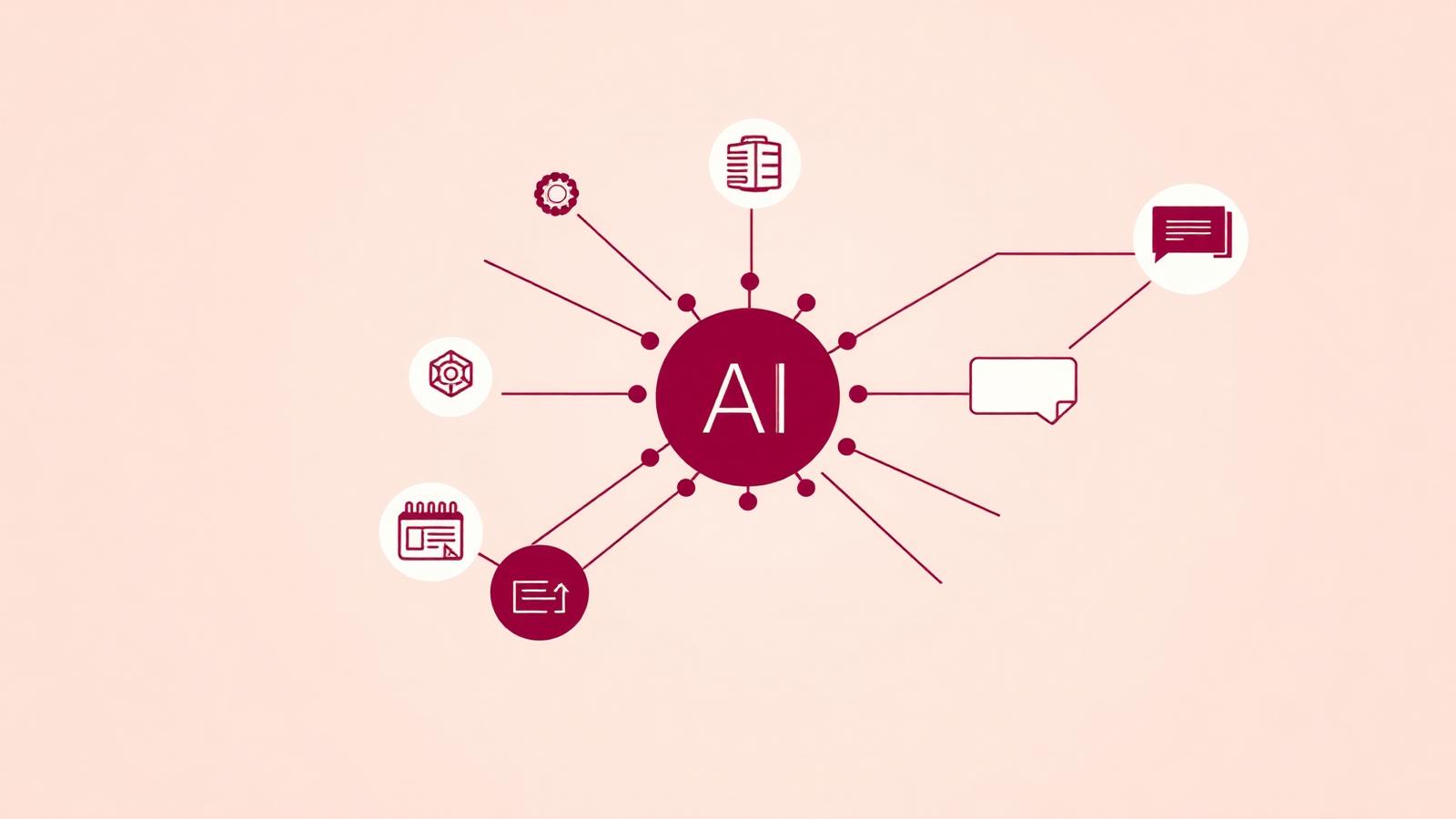
A robust WhatsApp automation separates three concerns. The channel layer handles WhatsApp mechanics: templates, session windows, media handling, delivery receipts. The conversation layer handles the AI's reasoning: what to say, what to ask, when to escalate. The action layer handles tool calls: bookings, CRM updates, payments, loyalty issuance.
Keeping these layers separate has practical benefits. You can upgrade your AI model without changing your channel plumbing. You can add a new channel — Instagram DMs, SMS, live chat — without rewriting your conversation logic. You can add a new tool without touching the AI configuration.
The alternative — a monolithic bot where all three layers are tangled together — starts fast and slows down. Every new capability makes the next one harder. Serious WhatsApp deployments benefit enormously from getting this architecture right early.

Language, culture, and voice
WhatsApp is intimate. It sits in the same list as messages from family and friends. Business messages that feel like ads land poorly. Messages that feel like a helpful representative of the brand land well. This has design implications: tone, formality, use of local dialect, response to greetings, use of emojis.
Multi-language operation matters more on WhatsApp than on other channels. Customers write in the language they prefer, mix languages within a conversation, and switch mid-thread. Modern AI systems handle this natively, but only if the deployment is set up to expect it rather than to fight it.
The voice of the WhatsApp AI is a brand decision, not a technical one. It should be shaped deliberately, tested with real customers, and revised regularly based on how conversations actually go.
Measurement and observability
Serious WhatsApp deployments instrument everything. Time to first response. Percentage of conversations resolved without human intervention. Escalation rate. Conversion rate from message to booked appointment or completed order. Customer satisfaction on resolved conversations. Number of conversations per template category.
These metrics should live in a dashboard the business actually looks at, not a report that gets emailed once a month. When the conversation volume is high, weekly review of anomalies — a spike in escalations, a drop in resolution rate, an unusual conversation pattern — is what keeps quality high.
Common failure modes and how to avoid them
The most common failure is treating WhatsApp automation as a marketing channel. Customers unsubscribe from businesses that treat their WhatsApp thread as a broadcast platform. WhatsApp is a service channel first; marketing works only when it is contextual and welcome.
The second common failure is under-investing in escalation UX. When the AI hands a conversation to a human, the customer should not feel it as a disruption. The context should transfer. The tone should stay consistent. The wait, if any, should be transparent.
The third is neglecting template quality. Bad templates get rejected. Bland templates underperform. Templates should be written with the same care as any other high-value customer touchpoint, and rotated based on performance.
References & further reading
Authoritative research and industry sources that informed this article.
- [1]The State of AI in Early 2024
McKinsey & Company
- [2]How Generative AI Is Changing Creative Work
Harvard Business Review
- [3]AI Index Report
Stanford HAI
- [4]
- [5]
Frequently asked
Do we need to be on the Business API to run AI automation?
For anything beyond basic use, yes. The Business API is what unlocks integration, volume, and the messaging patterns that make AI-driven WhatsApp viable.
How do we handle customers who prefer to talk to a human?
The best deployments make handoff frictionless and preserve context. Customers who ask for a human get one; customers who are happy with the AI often do not ask.
Is WhatsApp automation compliant with privacy regulations?
Yes, when built responsibly. Opt-in, data retention, and cross-border data flow all need to be designed intentionally rather than left to defaults.
How do we prevent our number from being flagged for spam?
Send only messages customers have opted into, respect the session window, use templates responsibly, and monitor delivery quality metrics. Good citizenship on the channel is the best protection.
Related articles in AI Integration
What Is AI Integration? A Complete Guide for Business Leaders in 2026
AI integration is no longer a science project — it's the operating layer that decides which companies compound and which stall. This guide breaks down what it actually means, how it works, and how to start.
12 min readAI IntegrationAI for Small Business: A Practical Playbook for Owners Who Do Not Have a CTO
You do not need a data science team or a seven-figure budget to put AI to work. This playbook is written for owners of businesses under 100 people who want real results this quarter.
11 min readAI IntegrationAI ROI Frameworks: How to Build a Business Case Your CFO Will Actually Sign
Enthusiasm is not a business case. This is the framework we use with finance teams to size, defend, and track return on AI integration investments.
13 min read