
AI for Small Business: A Practical Playbook for Owners Who Do Not Have a CTO
You do not need a data science team or a seven-figure budget to put AI to work. This playbook is written for owners of businesses under 100 people who want real results this quarter.
By HololTeck Editorial

Key takeaways
- 01Small businesses have a structural advantage in AI adoption: fewer stakeholders, shorter decision cycles, and cleaner data footprints.
- 02The best first projects target owner time, front-desk load, and inbound response speed.
- 03Whatsapp, SMS, and email are the highest-leverage channels for AI in small businesses today.
- 04Monthly cost for a meaningful integration is usually a fraction of one part-time salary.
- 05The biggest risk is not technology — it is picking a scope that is too broad for the first project.
Why small businesses are actually better positioned than enterprises
Enterprise coverage of AI dominates headlines, but the honest reality is that small and mid-sized businesses often deploy AI faster and to greater proportional effect. The reason is structural. A small business has one owner, one operations lead, and one preferred set of tools. There are no cross-functional steering committees, no procurement cycles measured in quarters, and no legacy platforms whose owners are protecting their patch. When the owner decides to try something, it can be live by the end of the week.
The other advantage is data cleanliness. A ten-person clinic has one calendar system, one patient database, and one messaging channel. That footprint is easier to integrate than a hospital group with dozens of overlapping systems. The AI has less to reconcile, so the results are more accurate and the project is cheaper.
The disadvantage, of course, is budget and internal expertise. That is exactly what this playbook is designed to solve for.
The three workflows every small business should automate first
The first workflow is inbound response. Whether the channel is Instagram DMs, WhatsApp Business, Facebook Messenger, a website contact form, or the phone, the same pattern applies. A prospect reaches out. The business responds. If the response takes more than a few minutes, a meaningful fraction of prospects go elsewhere. An AI assistant that answers the first message within seconds, asks the qualifying questions the owner would ask, and either books the meeting or hands off to a human is often the single most valuable integration a small business can make.
The second workflow is appointment management. Reminders reduce no-shows. Rescheduling links reduce phone calls. Waitlists fill last-minute cancellations. All of this can be automated over WhatsApp or SMS at a cost that is trivial compared to a lost booking.
The third workflow is repeat business. A loyalty program with digital cards, automated milestones, birthday offers, and reactivation messages for lapsed customers is a machine that runs itself once it is set up. For most services businesses, incremental revenue from an active loyalty program more than covers the cost of the entire integration stack.
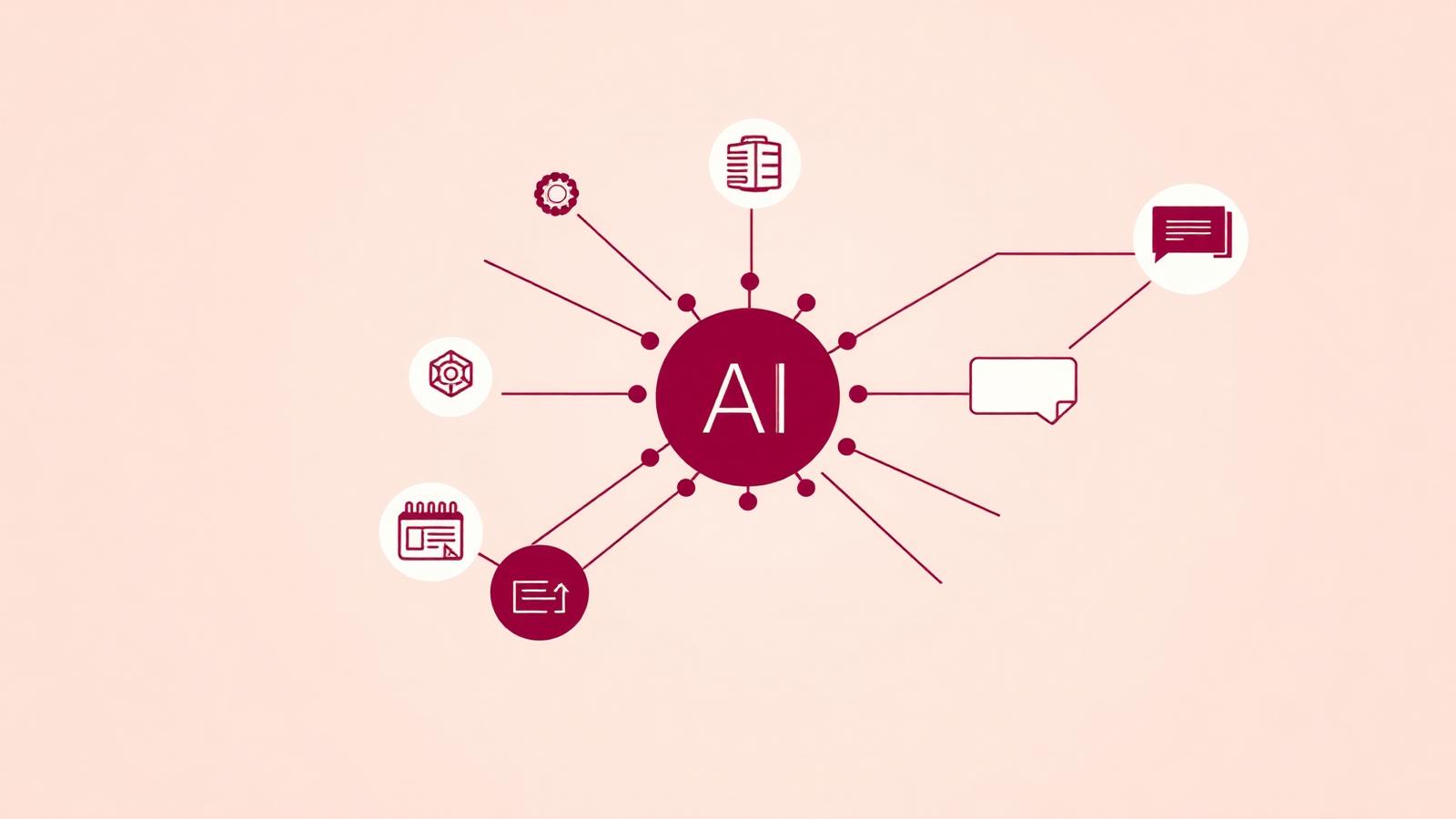
What owner time looks like after these three are in place
A week in the life of an owner before integration is a series of interruptions. A message on Instagram at 8am. A rescheduling call at noon. A no-show at 3pm. A birthday campaign that never gets sent. Payroll on Friday because it was too busy on Thursday. The owner is running the business by being everywhere.
After integration, the pattern changes. Inbound messages get answered instantly and only reach the owner if they are actually complex. Bookings shift themselves around. Loyalty communications go out on schedule. The dashboard shows what is happening without the owner having to ask. The week is no longer a series of interruptions; it is a series of choices.
This is the outcome that matters most. Not cost savings, though those are real. Not response times, though those are important. Reclaimed owner time is what unlocks everything else — training staff, opening a second location, working on the actual product or service.
Budget: what you should actually expect to spend
For a small business under 100 employees, a meaningful AI integration typically costs less than a single part-time salary per month once it is live. Setup costs are one-time and depend on how many systems need to be connected, how much historical data needs to be cleaned, and how many custom workflows are in scope. A serious partner will quote fixed prices for the setup and predictable monthly costs for the ongoing service.
The single biggest cost mistake small businesses make is trying to buy an enterprise platform. Enterprise platforms are priced for enterprises, and the features you are paying for are the ones designed to survive committees and audits you do not have. A purpose-built stack for small business will do more with a fraction of the sticker price.
The second biggest mistake is trying to build it yourself with generic tools because the sticker price looks lower. The sticker price is not the total cost. The total cost includes your time, the time your team spends debugging edge cases, and the revenue you leave on the table while the system is not working properly.

Choosing a partner without getting oversold
A good AI partner for a small business will start by asking about workflows, not about technology. If the first meeting is a deck of logos and model architectures, that is a signal. If it is a whiteboard of your inbound funnel and your booking flow, that is a better one.
Ask for a fixed price on the first workflow. Ask what the escalation path looks like when the AI is uncertain. Ask what data leaves your business and what stays. Ask what happens if you want to change providers in a year. The answers should be direct.
The most important quality in a partner is not scale or brand recognition — it is proximity. A partner who understands your industry, your language, and your customers will outperform a global brand that has to translate everything through a project manager.
Common pitfalls, ranked by how much money they cost
The most expensive pitfall is scope creep on the first project. The owner sees the demo, gets excited, and asks for one more thing, and then one more. Six months later the project is not live and the momentum is gone. Ship the first workflow small, then expand.
The second most expensive pitfall is skipping data hygiene. Duplicate contacts, inconsistent phone number formats, dead email addresses, unlabelled leads. A one-week data cleanup before go-live is worth ten times its cost in downstream accuracy.
The third is ignoring the human handoff. Every AI workflow needs a moment where the system says: this one is for you. If that moment is not designed carefully, customers get stuck, staff get frustrated, and trust in the whole system erodes. This is a design problem, not a technology problem, and it is solvable in an afternoon if you take it seriously up front.
What to measure so you know it is working
Three metrics tell you almost everything you need to know in the first ninety days. Time to first response on inbound leads: this should drop from hours to seconds. Conversion rate from inbound message to booked appointment: this should rise meaningfully. Owner hours spent on repetitive tasks: this should visibly shrink on a weekly basis.
Vanity metrics like number of AI conversations or messages handled are less useful. What matters is outcomes: bookings made, revenue generated, hours reclaimed, customers retained. A monthly review of these three numbers, honestly reported, is enough to know whether the integration is earning its keep.
References & further reading
Authoritative research and industry sources that informed this article.
- [1]The State of AI in Early 2024
McKinsey & Company
- [2]How Generative AI Is Changing Creative Work
Harvard Business Review
- [3]AI Index Report
Stanford HAI
- [4]
- [5]
Frequently asked
Do I need to speak English to run AI workflows for my business?
No. Modern AI systems handle Arabic, French, Spanish, and dozens of other languages natively. Your customers can be served in the language they message you in.
Will AI replace my receptionist or front-of-house staff?
Not in a well-designed integration. It handles repetitive first-touch work so your team can spend time on the customer interactions that actually benefit from a human.
How do I know if my data is clean enough to start?
A short discovery — usually a single working session — will tell you. Most small businesses need a few days of cleanup rather than a full migration project.
What happens if the AI gets something wrong with a customer?
Well-designed systems escalate uncertain cases to a human before they become mistakes, and log every action for review. The failure mode is a handoff, not a bad answer.
Related articles in AI Integration
What Is AI Integration? A Complete Guide for Business Leaders in 2026
AI integration is no longer a science project — it's the operating layer that decides which companies compound and which stall. This guide breaks down what it actually means, how it works, and how to start.
12 min readAI IntegrationAI ROI Frameworks: How to Build a Business Case Your CFO Will Actually Sign
Enthusiasm is not a business case. This is the framework we use with finance teams to size, defend, and track return on AI integration investments.
13 min readAI IntegrationAI Adoption Strategy: The Sequence That Actually Works in Real Companies
There is a right order to adopt AI, and most companies get it wrong. The right sequence takes eighteen months. The wrong sequence takes four years and gets abandoned.
12 min read