
AI Agents vs Chatbots: Why the Distinction Matters More Than the Marketing Suggests
Every vendor now calls their product an AI agent. Most of them are still chatbots. The difference is significant, and buyers who understand it make better decisions.
By HololTeck Editorial

Key takeaways
- 01A chatbot answers questions. An agent takes actions and can chain those actions across systems.
- 02The technical difference is tool use, memory, and autonomous decision-making within permitted scopes.
- 03Agents unlock genuinely new business outcomes that chatbots cannot, but they raise the governance bar.
- 04Buyers should ask what the system can do, not just what it can say.
- 05Well-designed agents make chatbots look like a preview of what was possible.
The vocabulary problem in the market today
Ask ten vendors what an AI agent is and you will get ten different answers. Some use the term for any chatbot with an integration or two. Others reserve it for fully autonomous systems that plan multi-step tasks with minimal supervision. Most of the market sits in the murky middle, using the label to signal ambition rather than capability.
For buyers this creates a real problem. Two products described identically in marketing materials can differ by an order of magnitude in what they actually do. The way to see through this is to focus on a small set of concrete capabilities rather than the label on the box.
The three capabilities that separate agents from chatbots
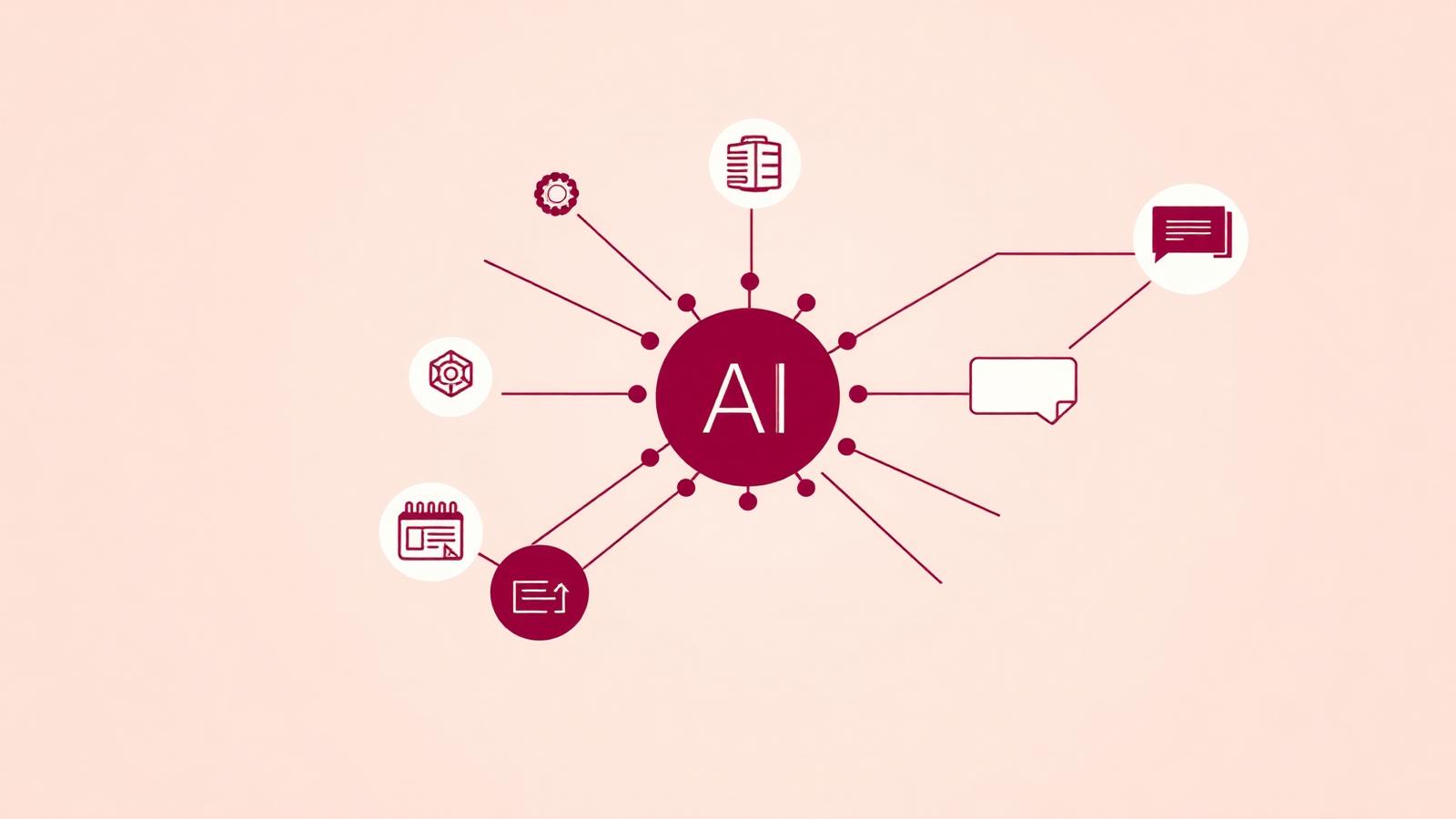
The first capability is tool use. A chatbot generates text. An agent can call functions in your systems: create a booking, issue a refund, send a message, update a record, trigger a workflow. The set of tools defines what the agent can do — and, just as importantly, what it cannot do.
The second capability is memory. A chatbot forgets the conversation the moment it ends. An agent has persistent memory of the customer, the case, and the history of prior interactions across channels. This is what makes it possible for a lead that started on Instagram to be closed in a branch office without repetition.
The third capability is autonomous decision-making within permitted scopes. A chatbot follows a script. An agent, given a goal and a set of tools, decides which sequence of tool calls best achieves the goal. This is what makes agents useful for complex, variable work — but it is also what raises the bar for governance and observability.
What agents make possible that chatbots do not
The clearest example is end-to-end lead handling. A chatbot on a website can capture a name and email and send it to a CRM. An agent can hold a full qualifying conversation, book a meeting on the right rep's calendar based on territory and availability, send a personalised confirmation over WhatsApp, and log the whole thread as a case in the CRM with the qualifying signals attached.
Another example is dispute resolution. A chatbot can gather information about a dispute and escalate it. An agent can look up the transaction, check the policy, calculate the appropriate resolution, apply it if it is within scope, and only escalate if it is not.
A third example is appointment management. A chatbot can send reminders. An agent can detect when an appointment is at risk of no-show, proactively offer a reschedule, fill the cancelled slot from the waitlist, and update all the affected parties without human involvement.
The governance shift that agents require
Because agents take actions, they need a different governance model from chatbots. Each tool needs a permission scope. Each action needs a log. Each decision needs a way to be reviewed and, where necessary, overridden. Rate limits, dollar limits, and blast radius controls all become first-class concerns.
This is not a reason to avoid agents — the value they unlock is significant — but it is a reason to be selective about where you deploy them and how. A well-designed agent for a low-stakes, high-volume workflow can be substantially autonomous. An agent for a high-stakes workflow needs tighter guardrails and more human checkpoints.
The vendors worth working with will have thoughtful answers to governance questions. The ones worth avoiding will change the subject.

Where chatbots still make sense
Chatbots are not obsolete. For narrowly scoped, information-only interactions, a well-designed chatbot is often the right choice. It is simpler to deploy, cheaper to run, and easier to reason about. A frequently asked questions bot on a small marketing site does not need agent capabilities and will run more reliably without them.
The point is to match the tool to the job. A chatbot for information. An agent for action. And where a workflow starts as information but often needs action, an architecture that promotes the chatbot into an agent for the cases that need it.
Practical questions to ask vendors
When evaluating an agent platform, five questions cut through most of the marketing. What are the specific tools the agent can call, and what are their permission scopes? How is memory stored, retrieved, and expired? What does the escalation path to a human look like at the interaction level, not just the platform level? How are actions logged and audited? And what happens when the agent is uncertain — does it act, ask, or escalate?
The answers to these five questions will tell you more about what you are actually buying than any demo. If the vendor cannot answer them clearly, the product is not ready for production use in your business, regardless of what the pitch deck says.
Looking ahead: what agents will make normal
Within a few years, the distinction between chatbots and agents will be less relevant because well-designed customer surfaces will just be agents. The interesting question will not be whether the system takes action, but how well its actions align with the business's intent, and how comfortable customers feel interacting with an entity that can decide on their behalf.
The businesses that get comfortable with agent design now will be the ones setting the pace when this becomes the default. The ones still shipping scripted chatbots then will look, to their customers, like they never quite made the transition.
References & further reading
Authoritative research and industry sources that informed this article.
- [1]The State of AI in Early 2024
McKinsey & Company
- [2]How Generative AI Is Changing Creative Work
Harvard Business Review
- [3]AI Index Report
Stanford HAI
- [4]
- [5]
Frequently asked
Are agents safe to deploy for customer-facing work?
Yes, when they are scoped carefully, instrumented well, and combined with clear human escalation paths for anything outside their competence.
Do agents replace human staff?
They replace routine work, not people. Well-designed agent deployments redirect human time to higher-value cases rather than eliminating headcount.
How much more expensive are agents than chatbots?
Per interaction, the difference is small. The larger difference is in setup complexity and the design work required to define tools and permissions responsibly.
Can I upgrade my existing chatbot to an agent?
Usually yes, provided the underlying system supports tool use and memory. In practice it is often faster to design the agent from scratch than to retrofit a scripted bot.
Related articles in AI Integration
What Is AI Integration? A Complete Guide for Business Leaders in 2026
AI integration is no longer a science project — it's the operating layer that decides which companies compound and which stall. This guide breaks down what it actually means, how it works, and how to start.
12 min readAI IntegrationAI for Small Business: A Practical Playbook for Owners Who Do Not Have a CTO
You do not need a data science team or a seven-figure budget to put AI to work. This playbook is written for owners of businesses under 100 people who want real results this quarter.
11 min readAI IntegrationAI ROI Frameworks: How to Build a Business Case Your CFO Will Actually Sign
Enthusiasm is not a business case. This is the framework we use with finance teams to size, defend, and track return on AI integration investments.
13 min read