
How to Get Customers to Come Back Without Constantly Giving Discounts
If you're asking how to get customers to return more often without constantly discounting, the answer is to give them a reason to continue the relationship: progress, rewards, recognition, exclusivity, referrals, points, stamps, or tiers. Here is how to choose the right loyalty mechanic for your business.
By HololTeck Editorial
Key takeaways
- 01Loyalty is about giving customers a reason to continue the relationship, not about discounting every transaction.
- 02Start by identifying the specific behavior you want customers to repeat — more visits, larger baskets, the next booking, or referrals.
- 03Stamps work best for frequent, repeatable purchases; points work best when transaction values vary; tiers recognize your highest-value customers.
- 04Referral programs turn happy existing customers into structured acquisition channels.
- 05Holol Loyalty lets businesses start with one module — stamps, points, or tiers — and expand the program without rebuilding anything.
The direct answer: give customers a reason to continue the relationship
Getting a customer through the door once is not the same as building a loyal customer. If you are asking, 'How can I get my customers to come back more often without constantly offering discounts?', the answer is to give customers a reason to continue their relationship with your business. That reason does not always have to be money off. It can be progress, rewards, recognition, exclusivity, referrals, points, stamps, tiers, or a combination of them. A loyalty program can turn an ordinary purchase into the beginning of the customer's next visit.
How can I get customers to come back more often?
Start by deciding what behavior you want customers to repeat. For a coffee shop, that might be visiting several times per week. For a restaurant, it could be returning several times per month. For a salon, it might be booking the next service. For a retail store, it could be increasing repeat purchases. The loyalty program should then reward that specific behavior. Instead of ending the customer relationship when payment is completed, the transaction gives the customer progress toward something they want. The pattern is simple: Visit → Earn → Progress → Unlock → Return.
Do I have to give customers a discount every time?
No. A loyalty program does not have to mean constantly giving customers 10% or 20% off. In fact, businesses can create rewards around specific customer behaviors rather than discounting every transaction. For example, a restaurant could offer: complete five qualifying visits and unlock a selected reward. A coffee shop could offer: collect seven stamps and receive the next eligible drink as a reward. A business could also give customers points that accumulate over time and can later be exchanged for selected rewards. The customer receives something valuable, but the business controls when, how, and why the reward is earned.
What is better: points, stamps, or tiers?
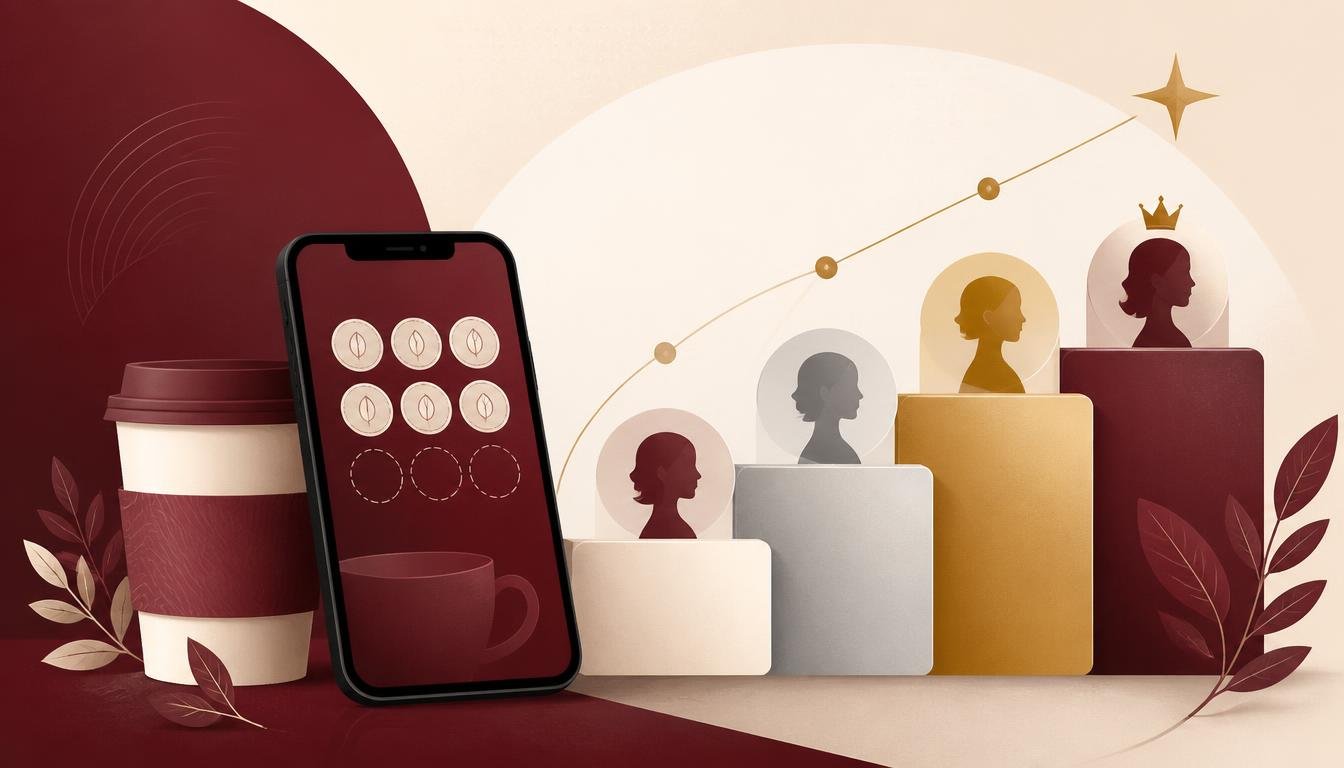
There is not one loyalty model that is right for every business. The best model depends on what you are trying to achieve. Stamps encourage repetition. They are easy for customers to understand. Imagine a café wants customers to return regularly. The program could be: purchase one → ●○○○○, purchase two → ●●○○○, purchase three → ●●●○○, purchase four → ●●●●○, purchase five → ●●●●● → reward unlocked. The customer can see their progress. This works particularly well for businesses with frequent, repeatable purchases. Holol Loyalty includes a digital Stamps module for creating this type of program without relying on physical paper cards.
Points are useful when customer purchases are not always identical. Instead of 'visit five times, receive a reward,' a restaurant or retailer could create a points-based program where customers accumulate points from eligible transactions and later use those points to unlock rewards. The experience becomes: Purchase → Earn points → Accumulate points → Unlock reward → Redeem. Holol Loyalty includes a Points Engine and Rewards Catalog so businesses can build this type of customer journey.
Tiers become useful when you want to reward your best customers differently. Not every customer has the same relationship with a business. Someone visiting for the first time and someone who has been returning for two years should not necessarily receive the same experience. A business could create a progression such as Member → Silver → Gold → VIP. As customers progress, different benefits or rewards become available. This changes the psychology of the loyalty program. The customer is not simply collecting discounts; they are building status and recognition with the brand. Holol Loyalty includes a Tiers module so businesses can create progression-based loyalty experiences.
I run a restaurant. What loyalty program could I use?
Imagine a restaurant wants to increase repeat visits. Instead of immediately offering everyone a discount, it could create a clear journey. First visit: the customer joins the loyalty program. Future visits: the customer earns qualifying points or stamps. Progress: the customer can see that they are approaching a reward. Reward unlocked: a selected reward becomes available. Redemption: staff validates the customer's loyalty identity and processes the reward. Next objective: the customer continues progressing toward another reward or tier. Now loyalty is not a one-time promotion; it is an ongoing customer journey.
What about a coffee shop?
Coffee shops are particularly suited to simple progress-based programs because customers may purchase frequently. For example: buy five qualifying coffees, get the sixth eligible coffee free. Instead of carrying a paper stamp card, the customer can participate digitally. The business can manage the program while staff process customer loyalty activity through the system. With Holol Loyalty, this can be configured using the Stamps module. The customer sees progress on their phone, and the business sees every stamp recorded and redeemed.
How can a retail store use loyalty?
Retail businesses may prefer points because customer spending and purchase frequency can vary. For example: shop → earn points → accumulate → unlock rewards. The retailer could also combine points with customer tiers. A new customer begins as a regular member. As their relationship with the brand develops, they could progress toward Silver → Gold → VIP. Different rewards or benefits can then be associated with different levels. This gives the business more flexibility than simply giving every customer the same permanent discount.
How do I turn my existing customers into promoters?
Your happiest customers may already recommend your business to friends. A referral program gives you a way to structure that behavior. The pattern is: existing customer shares referral → friend joins → qualifying action occurs → referral is recorded → reward becomes available. The business decides what behavior qualifies and what incentive makes sense. Holol Loyalty includes a referral system alongside its other loyalty modules, allowing customer retention and customer acquisition to work together.
How do customers actually use the loyalty program?
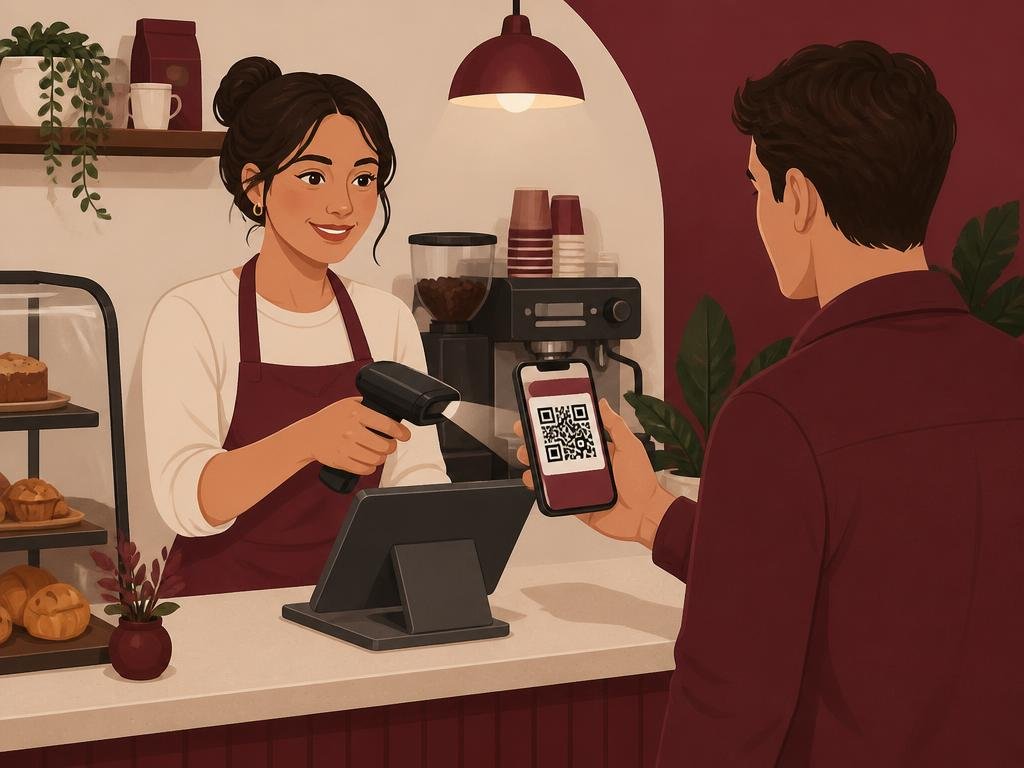
The experience should be simple. A typical Holol Loyalty customer journey can look like this: join the business loyalty program, access the digital loyalty profile or card, present the customer QR when required, staff verifies the customer, points, stamps, or other eligible activity is recorded, the customer sees progress, a reward becomes available, and staff validates redemption. The complicated business rules stay behind the scenes. The customer sees the part that matters to them: what have I earned, what can I get, and what am I progressing toward?
Do customers need another complicated app?
A loyalty experience should not create unnecessary friction. Holol Loyalty is designed around a mobile-friendly customer experience where customers can access their loyalty relationship with participating businesses, including their loyalty information, QR identification, rewards, and related customer features. This means the customer experience can remain simple while the business operates the management system behind it.
How can my staff manage the program?
Staff should not need full access to the business administration system just to serve customers. Holol Loyalty separates the operational staff experience through the Holol Loyalty Staff Terminal. Authorized staff can perform permitted customer loyalty actions, such as identifying customers through QR scanning and processing relevant loyalty transactions. Meanwhile, management retains control over the loyalty program from the business side.
Should I choose rewards based on what customers want or what is cheapest for me?
Both customer value and business economics matter. A reward needs to feel worthwhile to the customer, but the program also needs to make commercial sense for the business. Instead of asking only 'What can I give away?', ask 'What customer behavior is valuable enough for me to reward?' For example, increasing a customer's visit frequency from once per month to twice per month may be considerably more valuable than simply giving that customer a discount on the visit they were already going to make. The loyalty program should be designed around the business objective first.
Can I start with a simple loyalty program?
Yes. A business does not need to launch points, stamps, tiers, referrals, coupons, and multiple rewards at the same time. Start with one clear objective. For example: objective — increase repeat visits; mechanism — digital stamps; rule — complete five qualifying purchases; reward — unlock one selected reward. Run the program, observe customer behavior, and then expand it when there is a reason to do so. Holol Loyalty is structured around different loyalty modules so businesses can build a program appropriate to their operation rather than forcing every business into exactly the same model.
What is the best loyalty program for my business?
Do not start by choosing the technology. Start with one question: what behavior do I want my customers to repeat? If you want more frequent visits, consider stamps. If customer transactions vary and you want more flexibility, consider points. If you want to recognize your highest-value customers, consider tiers. If you want existing customers to bring new customers, consider referrals. And when several objectives matter, those mechanisms can form part of a broader loyalty ecosystem.
Build loyalty around behavior, not discounts
A strong loyalty strategy is not simply 'give customers a discount so they come back.' It is: identify valuable behavior, give the customer a reason to repeat it, show their progress, recognize loyalty, reward the right action, and continue the relationship. That is the thinking behind Holol Loyalty. Want to see what a loyalty program could look like for your business? Try Holol Loyalty and build your customer journey around the behavior you actually want to grow.
References & further reading
Authoritative research and industry sources that informed this article.
- [1]
- [2]The New Rules of Customer Loyalty
Harvard Business Review
- [3]
Explore further
Holol Loyalty product page
Explore points, stamps, tiers, referrals, and digital wallet cards.
How Holol Loyalty works
A deeper look at the ready modules that make loyalty easy to launch.
Loyalty without replacing your POS
See how a loyalty program can run alongside your existing checkout system.
Book a free consultation
Talk to HololTeck about designing a loyalty program for your business.
Frequently asked
Do I need to give discounts for a loyalty program to work?
No. Rewards can be based on progress, status, exclusivity, or referrals. Discounts are one option, not the only option.
Should I start with points, stamps, or tiers?
Choose the mechanic that matches the behavior you want. Stamps for frequent similar purchases, points for variable spend, tiers for high-value recognition.
Can customers use the program without installing an app?
Yes. Holol Loyalty works in the mobile browser and supports wallet passes where available, so customers do not need a separate app.
How do staff add points or stamps?
Staff use the Holol Loyalty Staff Terminal to scan the customer's QR code and record approved loyalty actions, without accessing business administration.
Can I start small and expand later?
Yes. Most businesses start with one module — stamps or points — and add tiers, referrals, or campaigns once the base program is running.
Related articles in Loyalty Systems
How to Create a Digital Loyalty Program Without Replacing Your POS System
Yes — you can add a digital loyalty program to your business without replacing your existing POS system. Your POS keeps handling sales and payments while a separate loyalty platform manages customers, points, stamps, tiers, and rewards. Here is exactly how that works.
12 min readLoyalty SystemsThe Holol Loyalty System: AI-Era Loyalty That Works From the Moment You Sign In
Building a real loyalty system used to mean months of development, integration pain, and a six-figure budget. The Holol Loyalty System changes that: sign in, and the modules serious businesses need — points, buy-and-get-free, level tiers, digital cards, and AI-driven engagement — are ready to use from day one.
11 min readLoyalty SystemsHow Modern Loyalty Programs Actually Work in 2026
Punch cards worked in 1990. Points programs worked in 2005. Modern loyalty is a data platform disguised as a customer benefit — and the businesses that understand this are winning meaningful share.
12 min read